|
[ Geographical Maps in the Article are not to scale, only indicative and no politcal significance]
The annual foot pilgrimage, known as the Parumala Padayatra, is a deeply revered spiritual journey undertaken by devout believers to honor the memory of St. Gregorios of Parumala during the Parumala Perunal season. This solemn procession commences at the historic St. Mary's Orthodox Syrian Cathedral in Thumpamon - traditionally referred to as Thumpamon Valiyapally - and culminates at the sacred Parumala Church.
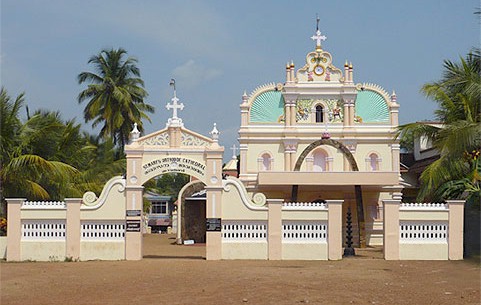
ST. MARY'S CATHEDRAL THUMPAMON
St. Mary's Orthodox Syrian Cathedral (also known as Marthamariyam Badrasana Devalayam) is a historic church in Thumpamon, near Pandalam, in the Pathanamthitta district of Kerala, India. It serves as the headquarters of the Thumpamon Diocese of the Malankara Orthodox Syrian Church. The site began as a small prayer hall built in AD 717, which was then rebuilt and expanded into a larger building in AD 900. The cornerstone for a larger church structure was laid on August 15, 1175 on land donated by the King of Pandalam, coinciding with the feast day of the Virgin Mary. As the diocesan headquarters, the cathedral serves as a central spiritual hub for the local Orthodox community and hosts major annual events and processions, such as the Parumala Padhyayathra. St. Mary's Cathedral, Thumpamon, serves as the mother church for numerous subsequent churches established across the wider region surrounding.
Historically, the spiritual luminaries and dignitaries associated with the cathedral include: Patriarch Ignatius Peter III: His Holiness famously visited Thumpamon in 1875. Following his historic visit, the Mulanthuruthy Synod of 1876 officially established Thumpamon as a diocese. St. Ignatius Elias III: The Patriarch of Antioch visited the region in 1932 during a peace mission to Malankara. Local history records that he passed through Thumpamon during his final days, shortly before his sudden death and subsequent burial at the nearby Manjinikkara Dayro. Patriarch Simon Mar Ignatius (Ahattullah): The cathedral holds a deep devotion to him, traditionally commemorating the anniversary of his death alongside the feast of the Virgin Mary. Other Catholicoses of Malankara
Thumpamon Diocese of Malankara Orthodox Church:
The Thumpamon Diocese is one of the seven foundational dioceses of the Malankara Orthodox Syrian Church. It was officially established in 1876 during the historic Mulanthuruthy Synod, which was convened under the ecclesiastical leadership and guidance of Patriarch Ignatius Peter III. Today, the diocese is headquartered at the Basil Aramana in Pathanamthitta, Kerala. Over the decades, it has expanded substantially in both administrative scope and membership, evolving into one of the largest, most prominent, and most influential dioceses within the entire Malankara Orthodox Syrian Church structure. Konattu Geevarghese Mar Yulios was the first diocesam Metropolitan of Thumpamon (1876 - 1883)
The diocese experienced significant spiritual and structural development through the stewardship of several key historical figures:
-
St. Gregorios of Parumala (1883–1902): Serving as the second Diocesan Metropolitan, he played a transformative role in the diocese's early history. He focused deeply on revitalizing the spiritual life of the faithful and pioneered early educational initiatives, laying a firm foundation for the community's social advancement.
-
Puthencavu Kochu Thirumeni (Geevarghese Mar Philoxenos) (1930-1951: Serving during the mid-20th century, he was highly instrumental in driving administrative growth, fostering academic excellence, and strengthening the local parishes.
-
Daniel Mar Philoxenos (1953 -1990: As a mid-century leader and the first resident metropolitan of the Thumpamon Diocese, he systematically expanded its institutional footprint. He focused heavily on social development, establishing healthcare facilities, higher education institutions, and charitable programs that broadened the church's impact on wider society.
Intimate Relationship of Parumala Thirumeni with Thumpamon Territory and Thumpamon Valiyapally:
The intimate relationship between Saint Geevarghese Mar Gregorios of Parumala and the historic region of Thumpamon, specifically the Thumpamon Valiyapally (St. Mary’s Orthodox Syrian Cathedral), is deeply rooted in administrative leadership, pastoral compassion, and enduring spiritual traditions.
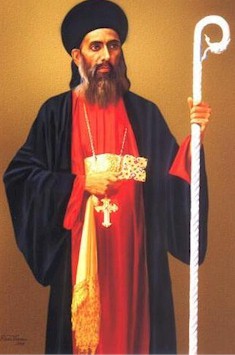
ST. GEEVARGHESE MAR GREGORIOS OF PARUMALA
-
Administrative Leadership & Stay at the Pallimeda: Following the demise of senior metropolitans, Parumala Thirumeni was appointed to oversee the Thumpamon and Kollam dioceses alongside his existing charge of Niranam. In 1884 , Parumala Thirumeni officially took over the administration of the Thumpamon Diocese. He frequently stayed at the Pallimeda (parish house/palace) of Thumpamon Valiyapally during his tenure until his passing in 1902.
-
Pastoral Grace During the Smallpox Epidemic: Serving during the mid-20th century, he was highly instrumental in driving administrative growth, fostering academic excellence, and strengthening the local parishes. In 1890, a devastating epidemic of smallpox swept across Kerala, hit Thumpamon particularly hard. Disregarding personal safety and social isolation norms of the era, Parumala Thirumeni traveled directly to Thumpamon to visit, nurse, and pray over afflicted patients. His spiritual interventions and physical care during this time cemented a profound, lifelong emotional and spiritual bond between him and the local community.
-
Modern Legacy & Spiritual Remembrance: The Annual Padayatra - Decades after his passing, the connection remains vibrant. Every year, St. Mary's Orthodox Cathedral, Thumpamon organizes a massive Parumala Padayatra (foot pilgrimage) where thousands of devotees march from Thumpamon to the Saint’s tomb at Parumala Church. Shrines and Feasts - The Valiyapally actively hosts the Parumala Mar Gregorios Memorial Feast. Under its administration, the St. Gregorios Chapel at Mambilali serves as a focal point for celebrating his life, highlighting his 124+ years of continued spiritual influence over the region.
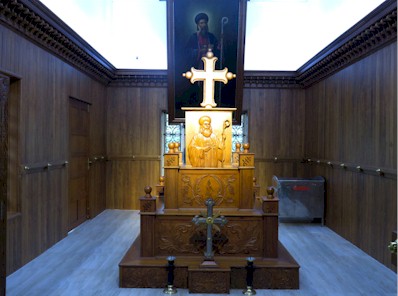
SHRINE OF PARUMALA THIRUMENI IN THUMPAMON VALIAPALLI
Kochu Jerusalem:
Parumala Thirumeni formally referred to the Thumpamon Church and its surrounding area as "Kochu Jerusalem" (Little Jerusalem). Between 1896 and 1897, while overseeing the Thumpamon Orthodox Diocese, he redesigned the front facade of the historic St. Mary's Orthodox Cathedral, Thumpamon and named it Kochu Jerusalem, likely for the reasons outlined below:
-
Spiritual Reflection of His Jerusalem Pilgrimage: In April 1895, Parumala Thirumeni undertook a historic and deeply spiritual pilgrimage to the Holy Land. He spent significant time leading Passion Week services in Jerusalem and later published the earliest printed travelogue in the Malayalam language detailing his experience. When he returned to Kerala, his heart was completely immersed in the spiritual atmosphere of the Holy City. Shortly after his return (1896–1897), he initiated structural changes to the Thumpamon church facade and blessed it with the name to recreate a symbolic visual and spiritual portal to Jerusalem for local believers.
-
A Token of Gratitude After Surviving a Deadly Epidemic: In 1885, a devastating smallpox epidemic swept through the village of Thumpamon. While others fled from the highly contagious and deadly disease, Parumala Thirumeni traveled directly to the territory, stayed at the parish, and went house-to-house praying over and comforting the sick. Local tradition records that through his ardent prayers and intercessions at the altar, the community was miraculously delivered and cured of the plague. The deep spiritual bond forged between the Saint, the territory, and the church elevated Thumpamon into a sanctuary of divine grace and healing, mirroring the holy, life-giving aura associated with Jerusalem.
-
Centrality and Antiquity of the Thumpamon Church: Dating back to its initial foundation in AD 717, the Thumpamon Valiya Pally is one of the most ancient, prominent, and unwavering strongholds of the Nazarene Christian faith in Central Travancore. Because it served as a sprawling center of faith, spiritual refuge, and ultimately the administrative headquarters for the diocese under his care, Parumala Thirumeni viewed the entire territory as a central nucleus of orthodoxy—much like Jerusalem stands as the cradle and epicenter of the global Christian faith.
The Thumpamon Padayatra To Parumala:
The Thumpamon Padayatra traditionally commences around October 31st, timing its arrival to sync with the peak festival days (Perunnal) culminating on November 2nd. The Thumpamon to Parumala Padayatra is a sacred foot pilgrimage undertaken by faithful devotees of the Malankara Orthodox Syrian Church. Moving away from modern transit, pilgrims choose to travel the entire distance on foot, transforming the physical journey into a profound spiritual odyssey.
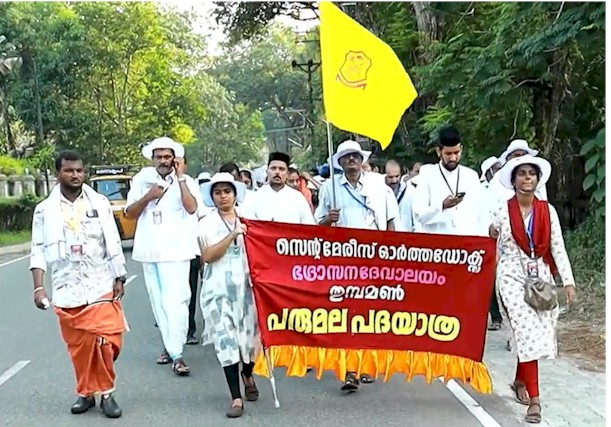
PARUMALA PADAYATRA
The Commencement of the Pilgrims' Journey: The fasting associated with the Parumala Perunnal and the Thumpamon Parumala Padayatra is a foundational spiritual practice for the pilgrims. Devotees observe a strict three-day or multi-day fast immediately leading up to the feast and the start of their foot journey.
The journey begins at St. Mary's Orthodox Syrian Cathedral (Thumpamon Valiyapally), known affectionately as "Kochu Yerushalaim" (Little Jerusalem), the Cathedral serves as the perfect spiritual launching pad for the trek. The foot pilgrimage is not viewed by the faithful as a simple walk, but as a deep spiritual retreat. Pilgrims walk to honor the memory, humility, and rigorous prayer life of Saint Gregorios of Parumala. The pilgrimage officially opens in the quiet, early hours of October 31st. Devotees gather inside the stone walls of the historic cathedral for the Holy Qurbana. This service allows pilgrims to cleanse their minds, confess, and center their hearts on God before taking their first physical step. Following the service, the Holy Fathers (Bishops) and parish priests gather at the altar and the church steps to address the congregation. They lead special intercessory prayers, invoking the protection of Saint Mary and Saint Gregorios. The pilgrims receive an apostolic benediction (sacred blessing), marking their transition from ordinary citizens to consecrated pilgrims (padayathriklar). After this church community provides light refreshments.
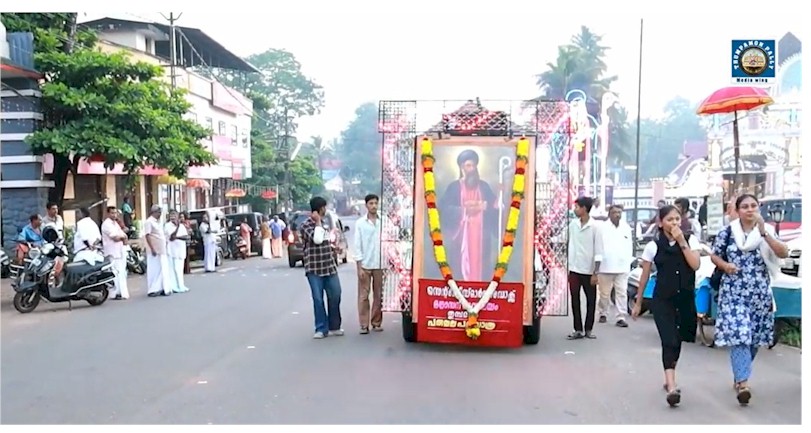
START OF THE JOURNEY AT THUMPAMON
The journey begins with the ceremonial handing over of the pilgrimage flag or a cross. Led by the ringing of church bells, the pilgrims step out of the Thumpamon gates. They sing traditional Orthodox Christian hymns and rhythmic chants dedicated to Parumala Thirumeni, moving in an organized, peaceful procession toward the Parumala Seminary Church. The atmosphere blends profound solemnity with joyful communal harmony as bystanders line the streets to witness the departure.
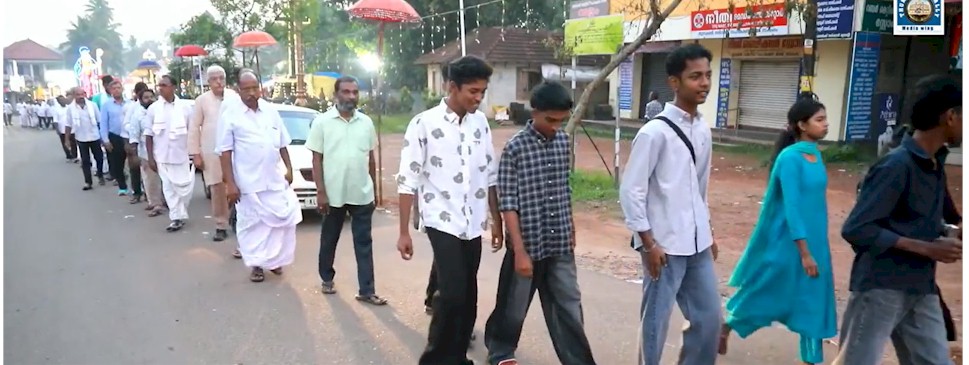
START OF THE JOURNEY AT THUMPAMON
The pilgrimage is deeply rooted in traditional Christian devotion and is characterized by several distinct elements:
-
Sacred Chants and Hymns: As they walk, the faithful sing traditional liturgical hymns in both Malayalam and ancient Syriac (the liturgical language of the West Syriac Rite).
-
Biblical Parallel: This continuous chanting draws a conscious spiritual parallel to the ancient, pious Jewish pilgrims who journeyed to the Temple of Jerusalem for festival seasons, singing the "Psalms of Ascent" (Psalms 120–134) as they climbed the holy mountain.
-
Holy Emblems: Devotees lead and accompany the procession by carrying consecrated parish crosses and traditional wooden staffs, symbolizing their identity as a traveling community of faith.
-
Sacrificial Devotion: Mirroring an ancient act of penance and humility, a significant number of pilgrims choose to walk entirely barefoot. This physical hardship is offered as a vazhipadu (a special spiritual offering or vow) for blessings received or prayers answered.
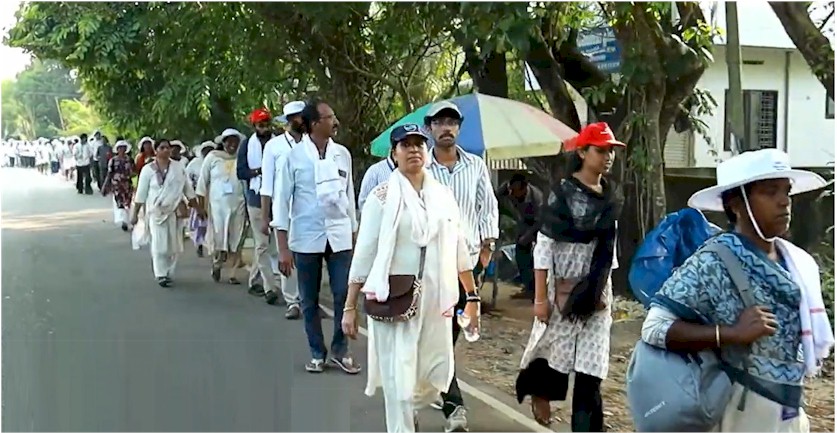
PARUMALA PADAYATRA
The Core Padayatra Route
The foot procession traditionally covers a distance of approximately 30 to 32 kilometers moving through the heart of Central Travancore via the following core route:
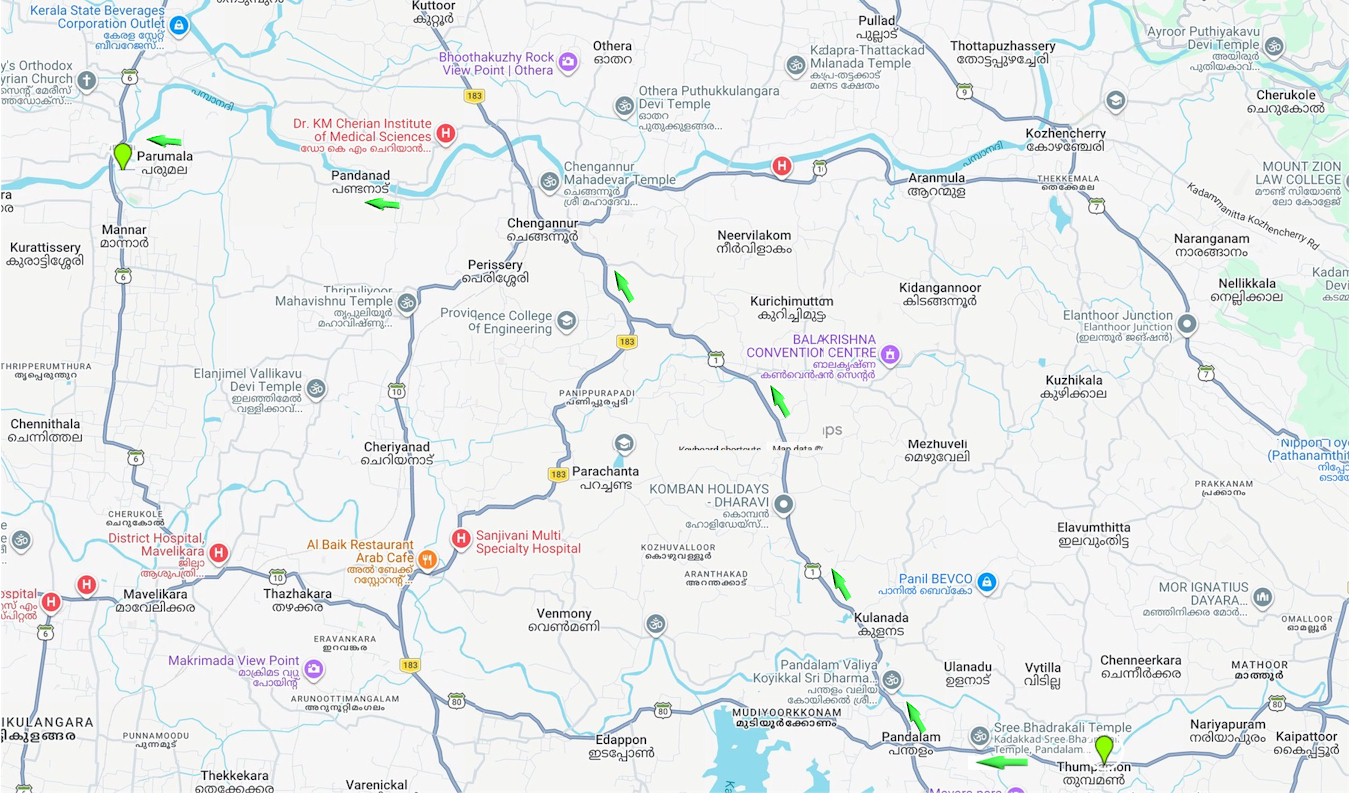
PARUMALA PADAYATRA CORE ROUTE
-
Departure: St. Mary's Orthodox Cathedral, Thumpamon. The procession moves through the main roads connecting Thumpamon toward Pandalam through State Highway 80 (SH-80) in Kerala which is the Mavelikkara–Pandalam Road (also commonly referenced as the Konni–Haipad Road)
-
Pandalam: From Pandalam junction, the procession align onto the main state highway Route 1 in Kerala which is State Highway 1 (KL SH 1), popularly known as the Main Central Road (MC Road). As one of Kerala's most heavily traversed corridors, the Main Central (MC) Road presents a mix of modern stretches and typical urban bottlenecks with heavy traffic.
-
Kulanada / Mulakuzha: Moving northward toward the Alappuzha-Pathanamthitta border areas through very busy MC Road which does not exist any designated pedestrian footpaths except in major townships. Pedestrians frequently face challenges like illegal vehicle parking, uneven heights (discontinuities), path holes and commercial encroachments.
-
Chengannur: Devotees pass through the historic town of Chengannur, which serves as a major congregation hub for multiple incoming padayatras. Further they walk through a smaller road Chengannoor - Parumala - Mannar Road via Pandanad.
-
Pandanad: Leaving Chengannur, the route enters the scenic, river-bound terrain of Pandanad.
-
Mannar: The procession winds through Mannar, approaching the final stretch near the Pampa River tributaries.
-
Destination: Parumala Seminary Church, crossing over via the local bridges (such as the Kottakkal Kadavu Bridge area) to reach the island community.
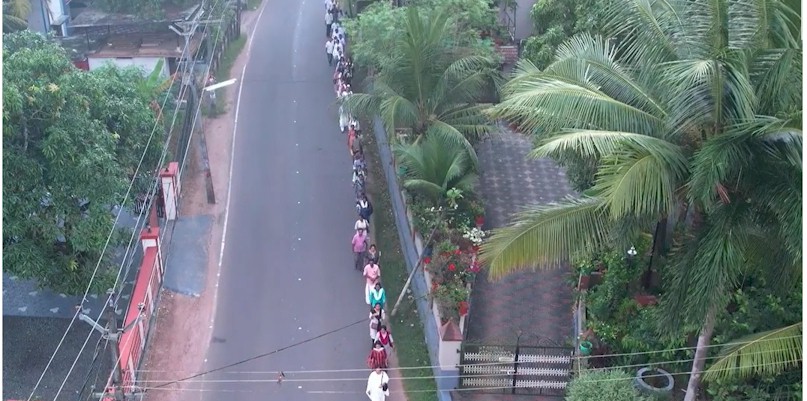
PROCESSION MOVING ON ROAD SIDE
Voluntary hospitality or Padayatra Sevam (pilgrimage service):
During this Padayatra hundreds of local residents, shopkeepers, youth clubs, and families set up roadside stalls. As per deeply rooted tradition in Kerala's culture, they offer free food, water, and refreshments to the passing pilgrims (Padayatriks). In Indian culture, a pilgrim is viewed as a representative of the divine. Hosting these refreshment stalls is seen as a direct way to serve God by serving His believers. Many hosts believe that by offering a cup of lime juice or a snack to a tired, barefoot pilgrim, they receive a share of the spiritual blessings (anugraham) of the pilgrimage. Walking under the Kerala sun causes rapid dehydration. Chilled lemon juice or Sambharam (spiced buttermilk) is vital for restoring electrolytes. Traditional snacks like Unniyappam (sweet rice fritters made with jaggery and banana) and local cookies provide quick carbohydrate boosts to help pilgrims push through miles of walking.
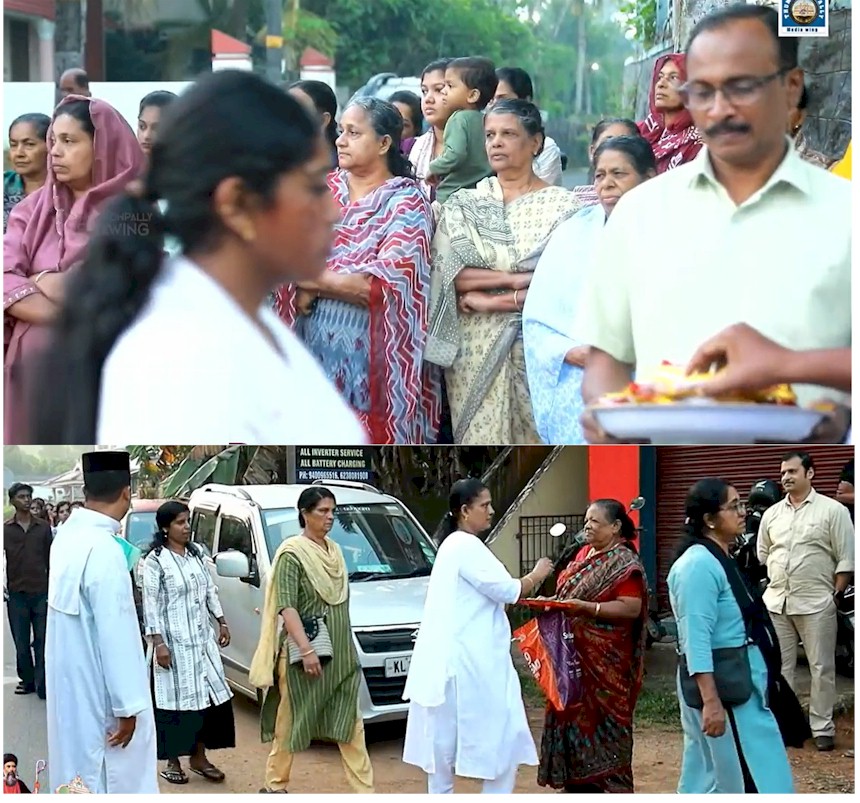
HOSPITALITY ON THE ROAD SIDE
The Padayatra passes through diverse neighborhoods, yet people of all faiths - Christians, Hindus, and Muslims - join hands to set up these counters. Wealthy landowners and humble daily-wage earners alike pool their money to buy supplies. Seeing a smiling local family standing by the road holding out a tray of snacks acts as an incredible psychological boost.These distribution points often double as brief rest areas where pilgrims can sit, stretch, and interact with the locals before continuing their journey. The voluntary distribution of food and water during the Thumpamon Parumala Padayatra transforms a grueling physical journey into a deeply emotional, community-driven celebration of shared humanity and faith.
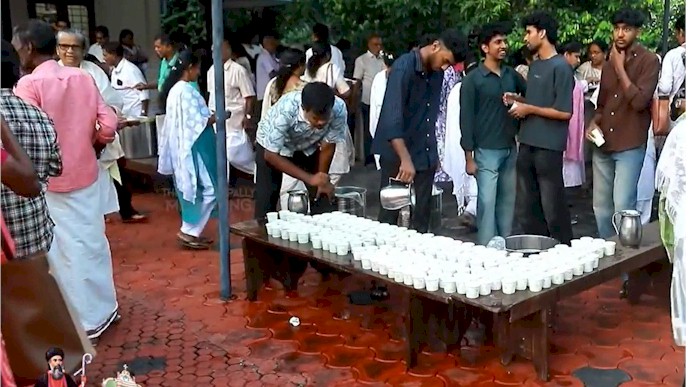
WAY SIDE SERVICES
Accommodation & Rest Stations:
The Thumpamon Parumala Pilgrimage relies on a highly coordinated, multi-stage network of local churches, parish halls, and youth organizations to manage the logistics of food, sanitation, and overnight stays across its 30+ mile route. Instead of large, purpose-built facilities, the pilgrimage utilizes existing community infrastructure along the central Travancore belt:
-
Host Institutions: Local Orthodox churches, parish halls, church-run schools, community hubs, and local anganwadis (courtyard shelters) open their doors to walkers. Major rest and night-halt setups are strategically concentrated around critical geographic waypoints like Mulakuzha, Chengannur, Pandanad etc. Large parish auditoriums and school buildings are converted into temporary dormitories:, segregated sleeping quarters to provide safe resting spaces for both men and women.
-
Volunteers: Church youth movements like the Orthodox Christian Youth Movement (OCYM) and local parish networks manage day-to-day operations.
-
Basic Needs: These groups man scheduled refreshment stations along the roadside, offering water, traditional drinks, and food to sustain the walkers.
-
Sanitation:
Organizers install temporary lavatory and sanitation blocks alongside existing permanent facilities at host parishes to accommodate the heavy volume of participants.
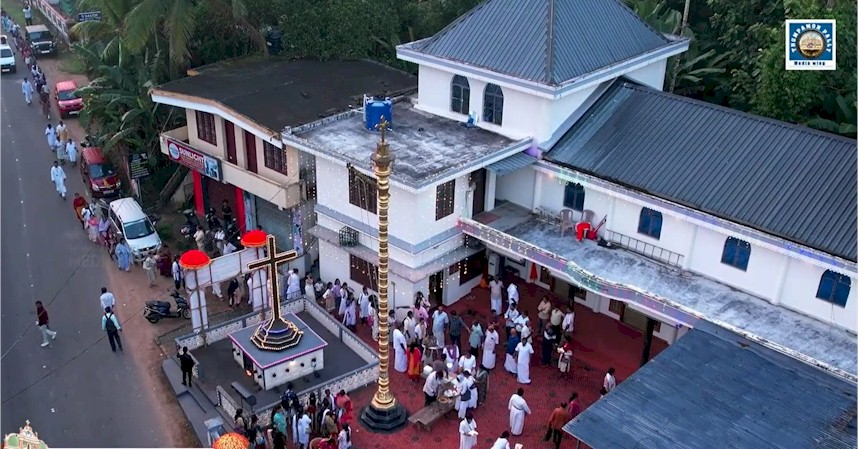
WAY SIDE REST STATION
One of the initial major halts is at Arathil Maha Edavaka. Arathil Palli (historically known as Arathil St. George Orthodox Maha Edavaka) is the oldest church in Pandalam, Kerala. Established in 1809 AD, this historical parish holds a significant status as a major "Maha Edavaka" (Great Parish) under the Malankara Orthodox Syrian Church. The church is situated in Ayiranikudy along the Kochalummoodu–Pandalam Road, making it easily accessible from the main town of Pandalam.
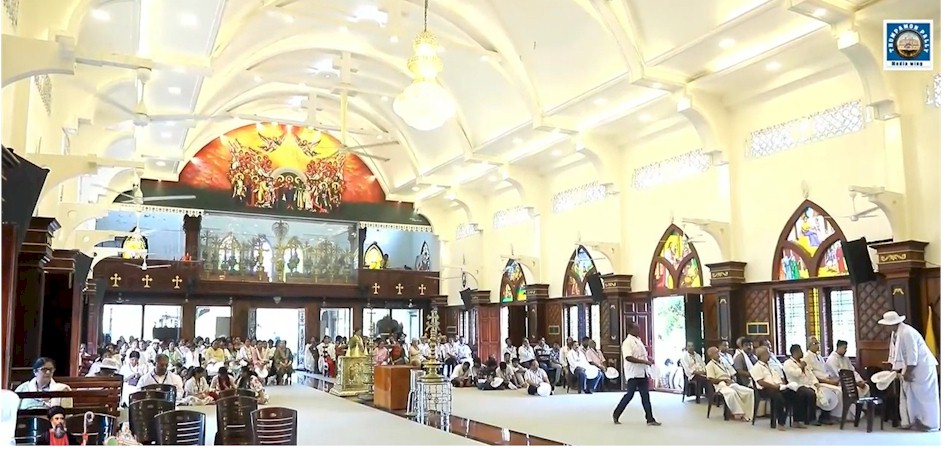
PILGRIMS AT ARATHIL CHURCH
The custom of offering free, sumptuous meals on banana leaves (Annadanam) is a core element of the annual Parumala Padayatra pilgrimage. During this spiritual foot-pilgrimage across Kerala, local hosting hubs - such as the first halt organized near Pandalam - provide massive community dining setups. Devotees traveling long distances to honor Saint Geevarghese Mar Gregorios (Parumala Thirumeni) are served comforting traditional feasts to sustain them along the journey.
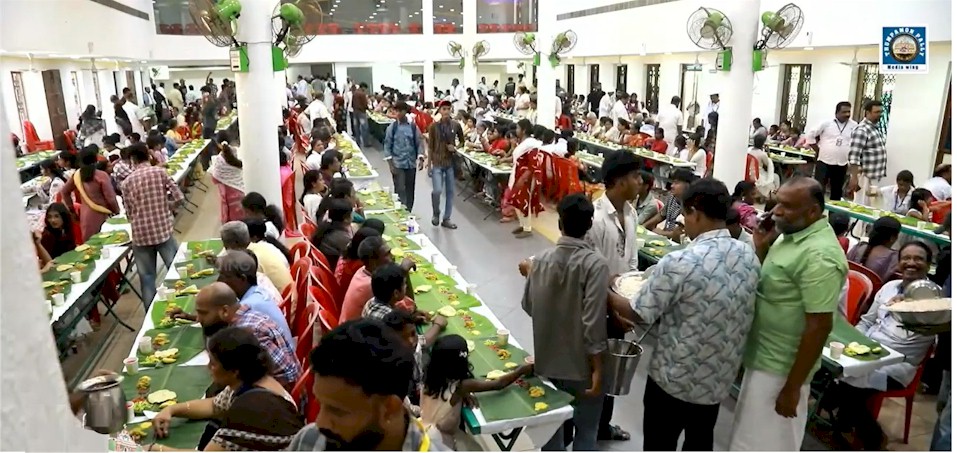
SUMPTUOUS MEALS PROVIDED AT HOSTING STATIONS
The arrival of the Parumala Padayatra at its destination is a powerful and breathtaking spectacle. As the massive wave of feet approaches Parumala Palli (St. Peter's and St. Paul's Orthodox Church), the heavy traffic and choked gridlock of the Parumala-Mannar area dissolve into a shared, singular rhythmic devotion. At this final stretch, the geography of Kerala beautifully unifies. The Convergence of Diverse Regions:
-
The Eastern Hill Regions: Pilgrims who trekked down from high-altitude terrain bring an intense, rugged endurance to the crowd.
-
The Western Paddy Regions (Kuttanad): Farmers and coastal dwellers arrive in droves, merging perfectly with the upland streams of people.
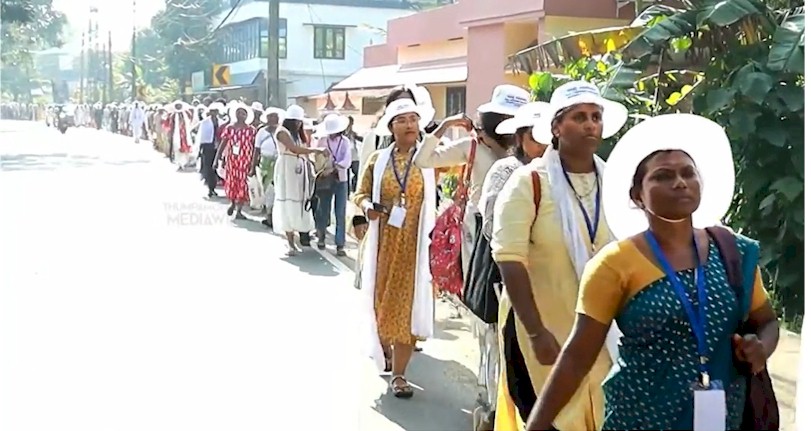
LARGE LINE OF MERGED GROUPS NEAR THE CHURCH
By dusk, the bottleneck near the church gates turns into a brilliant sea of light. Thousands of devotees pass through the gates holding burning, flickering candles, casting a warm, collective glow across the courtyard. The collective exhaustion of the multi-day walk immediately lifts the moment they approach the tomb of Saint Geevarghese Mar Gregorios (Parumala Thirumeni). Amidst heavy smoke from frankincense, chanting choir hymns, and ringing church bells, pilgrims place their candles down—completing a profound physical and spiritual vow.
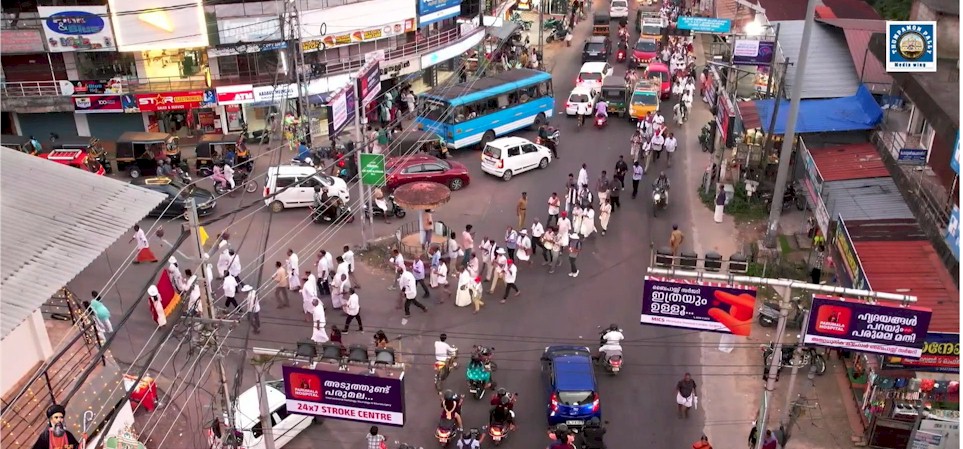
NEAR DESTINATION AT HEAVY TRAFFIC PARUMALA MANNAR
The Reception at Parumala Church: The pilgrimage traditionally concludes right before the grand feast days (usually culminating around November 1st and 2nd), aligning with the grand Holy Raaza ceremonial procession at the seminary grounds. Upon arrival at Parumala, the pilgrims are accorded a grand, ceremonial reception. During the customary reception of the Padayatra at the Parumala Seminary premises, the ritual handover of lighted candles stands as a deeply significant spiritual highlight. The Parumala Seminary Manager Priest or the Ramban officially welcomes the arriving processions by extending a live, lit candle to the team leaders of the padayatra groups. At the Entrance, Devotees are welcomed by church authorities, priests, and senior members of the Malankara Orthodox Syrian Church. Pilgrims proceed directly to the tomb of St. Gregorios inside the church to offer incense, light candles, and present their vows and to take part in Intercessory Prayers. The reception concludes with special blessings, distribution of Nercha (blessed food offering), and a holy fellowship gathering.
Other Regional & Diocesan Padayatras to Parumala: While the Thumpamon Valiyapally Padayatra is one of the oldest and most historically prominent, thousands of pilgrims arrive in massive, organized groups from various dioceses across Kerala and neighboring states for the annual feast (Parumala Perunnal). More than 500,000 devotees collectively converge on foot at the Parumala Church grounds. The other major and notable Regional & Diocesan Padayatras to Parumala include:
-
The Malabar Diocese Padayatra: A major, long-distance foot-pilgrimage from the northern districts of Kerala (the Malabar region). Due to the vast distance, these pilgrims spend several days on the road performing rigorous spiritual penance before reaching the shrine.
-
The Brahmavar Diocese Padayatra: One of the most unique and distant organized treks, welcoming pilgrims arriving from regions as far as Mangalore and the coastal Karnataka belt. They traditionally gather at intermediate parishes near Chengannur (like Perissery St. Mary's Church) to complete the final collective barefoot stretch to Parumala under the blessing of their Diocesan Metropolitan.
-
Kottayam and Niranam Diocesan Padayatras: Originating from core Orthodox bastions in Central Travancore, these heavily populated pilgrim tracks crawl sequentially through Pathanamthitta and Alappuzha districts.
-
The Kollam and Thumpamon Peripheral Tracks:
Parallel pathways that funnel thousands of barefoot devotees chanting ancient Syriac and Malayalam liturgical hymns from the south.
On the eve of the festival (November 1st) and the feast day (November 2nd), all these distinct lines - carrying consecrated parish crosses, wooden staffs, and colorful banners - merge into the main approach roads of the Parumala Seminary. Each team undergoes the same time-honored reception, receiving a holy lighted candle from the Ramban before transitioning together into the major public convention sessions.
Public meetings have increasingly become a standard and prominent feature of modern Padayatra receptions and feasts. When the Thumpamon Parumala Padayatra and other major pilgrimage cohorts converge at the Parumala Church grounds, spiritual rituals are regularly paired with or followed by a formal public gathering (Sammelan). Following the meeting, pilgrims usually transition back to solemn acts of individual intercession at the holy tomb of Parumala Thirumeni.
Contemporary Controversy: The recent 2026 controversy surrounding the closing of the gates and the invitation of a celebrity chief guest highlights a growing tension between traditional spiritual devotion and modern event management at major religious gatherings. The decision by church authorities to invite Malayalam actor as the chief guest for the concluding public meeting on November 1 created a deep emotional rift among dedicated pilgrims (padayathrikal). While the administration emphasized his extensive philanthropic work rather than his celebrity status, the practical outcome on the ground - security protocols, restricted access, and overwhelming crowds - clashed heavily with the solemn nature of the pilgrimage.
According to social media backlash, the sadness and "deep scar" felt by the faithful stem from several key factors that have been widely debated across platforms:
-
Disruption of Sacred Space: For many barefoot pilgrims who endure days of physical fasting and penance, the church is a sanctuary of peace. Introducing a mega-star shifted the atmosphere from one of silent, grief-burdened prayer at the tomb to celebrity fanfare and media frenzy.
-
The Symbolism of Closed Gates: Closing or restricting the main gates for VIP security or crowd management meant that the very people who walked miles to fulfill their vows felt locked out of their spiritual home, prioritizing a public meeting over their personal devotion.
-
Precedent for Sacred Festivals: Many long-time devotees expressed concern on social media regarding how this event might compromise the traditional sanctity of future gatherings.
While church leadership frequently looks to engage with broader civic society through well-known figures, this incident has sparked a necessary, passionate conversation within the community about preserving the sacred boundaries and priority of the humble pilgrim over public spectacles.
Conclusion: Ultimately, the Thumpamon Parumala Padayatra remains a powerful, living testament to an unshakeable faith that has endured for generations. Across thirty-five years of changing times, this historic foot-pilgrimage has beautifully preserved the spiritual bridge between Thumpamon Valiyapally and the sacred shores of Parumala. While public meetings, the presence of secular personalities, and modern gatherings continue to evolve around the annual feast, the true, unchanging essence of the journey lives on in the quiet devotion of the padayathrikal. As the barefoot pilgrims receive the traditional lighted candle, step into the sanctuary, and lay their prayers before the tomb of Parumala Thirumeni, they remind us that the heart of this great tradition is not found in public spectacles, but in the humble, resilient spirit of a community walking together in search of divine grace.
May the memory of the righteous and the memory of the saint be a fortress for us. Amen.
[Photo Courtesy: Thumpamon Palli Media Wing]
(If you liked the Article please share it with your friends, subscribe for Updates or Send your Feedback clicking button below]
 Subscribe for EMail Updates / Send Feedback |
|
|






